The machines were the only ones talking.
Craig’s boots kept a slow rhythm over the cracked concrete, each step lost in fan noise and the hiss of the cooling system. Server racks followed the cavern wall, their status lights blinking in rows. At the far end a bank of monitors lit the rock cyan. On the centre screen a white Ω burned over a shifting lattice of data.
Cables ran from the consoles into a circular slab of black alloy set straight into the rock. The same symbol lay recessed in the metal, its dull violet pulse keeping time with the screen. Some access point somebody had tried to erase, then settled for hiding.
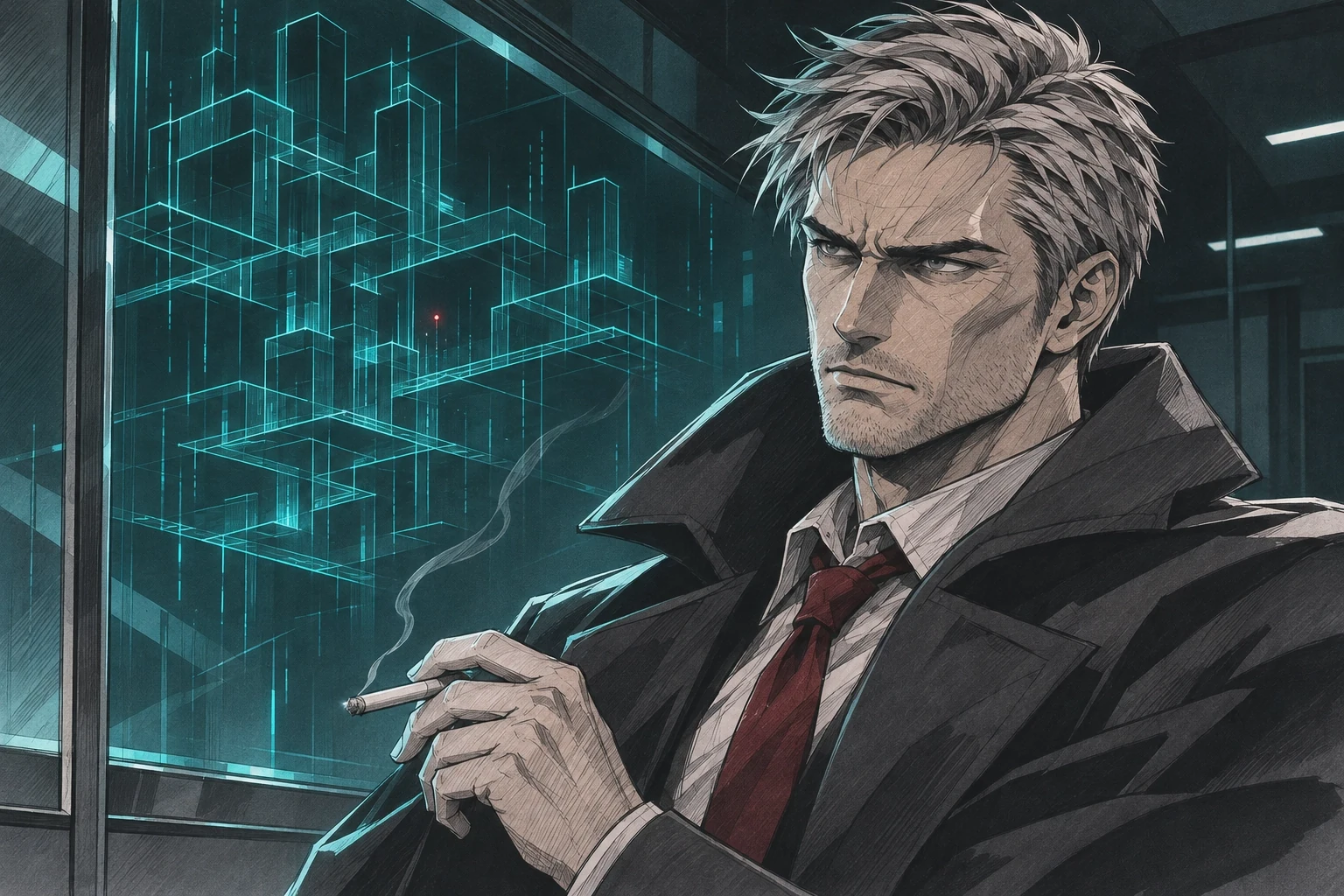
Craig O’Harris drew on his cigarette and watched the smoke cross the light. Four hours in Tokyo and already he stood in front of a secret no one had had the nerve to write down.
“Nils,” he said. “You’re telling me Professor Rho pulled me off three Security Corps contracts and dragged me across the Pacific for…” He tipped his chin towards the Ω and followed the wires to the door. “A mood light and some Greek typography.”
Nils Ostergaard’s shoulders drew in. His hands stayed steady over the keys.
“With respect, sir, if this were just a light, you’d have gotten a memo instead of a plane. This was flagged directly to your office for a reason.”
Craig stepped closer. “I noticed. I also noticed it isn’t on any official Security Corps docket.”
“No, sir.” Nils took a second before he went on. “Professor Rho requested we keep this cell air-gapped from Velon infrastructure. No corporate network, no automated logging. Raw capture only.” He glanced up and met Craig’s eye. “He said anything worth your attention was also worth someone else’s.”
Craig’s mouth twitched. “Still paranoid. Good. That’s why I pay him.”
Packets, waveforms and lattice diagrams crawled over one another in the monitor’s pale light. Craig let the silence stretch until Nils filled it.
“We picked up the first anomaly piggybacking on deep archival noise. Old government channels. Dead bands that aren’t dead.” A map came up, a scatter of faint nodes across oceans and continents. “At first we assumed NEXUS‑09 spillover. Ghost traffic from the city’s expansion cycles.”
NEXUS‑09. The problem child. A self-building digital labyrinth half the world pretended didn’t exist while the other half poured money into trying to tame it.
Craig watched the nodes flicker, smoke curling around his fingers.
“But the signatures don’t match,” Nils went on. “Different key cadence, different structural recursion. It mimics the NEXUS‑09 framework, but it’s… rotated. Off-angle.” He tapped a highlighted block of code. “Professor Rho believes it’s an address. Or rather, a family of them.”
“Addresses to what.”
Nils brought up a stack of rotating wireframes. Each shifted as new data came in, city plans building on the last and never quite settling.
“Self-modifying constructs. City-scale architectures. Dynamic zoning, self-optimising layers, autonomous infrastructure hooks. Structurally quite close to the NEXUS‑09 project.”
“The shifting city,” Craig said. “Government builds a miracle that eats its own rulebook, then pretends it never signed off on it.” He looked at the Ω pulsing in the metal. “Velon barely keeps a skeleton crew inside that place, and you’re standing here telling me it might just be one node in a larger mess.”
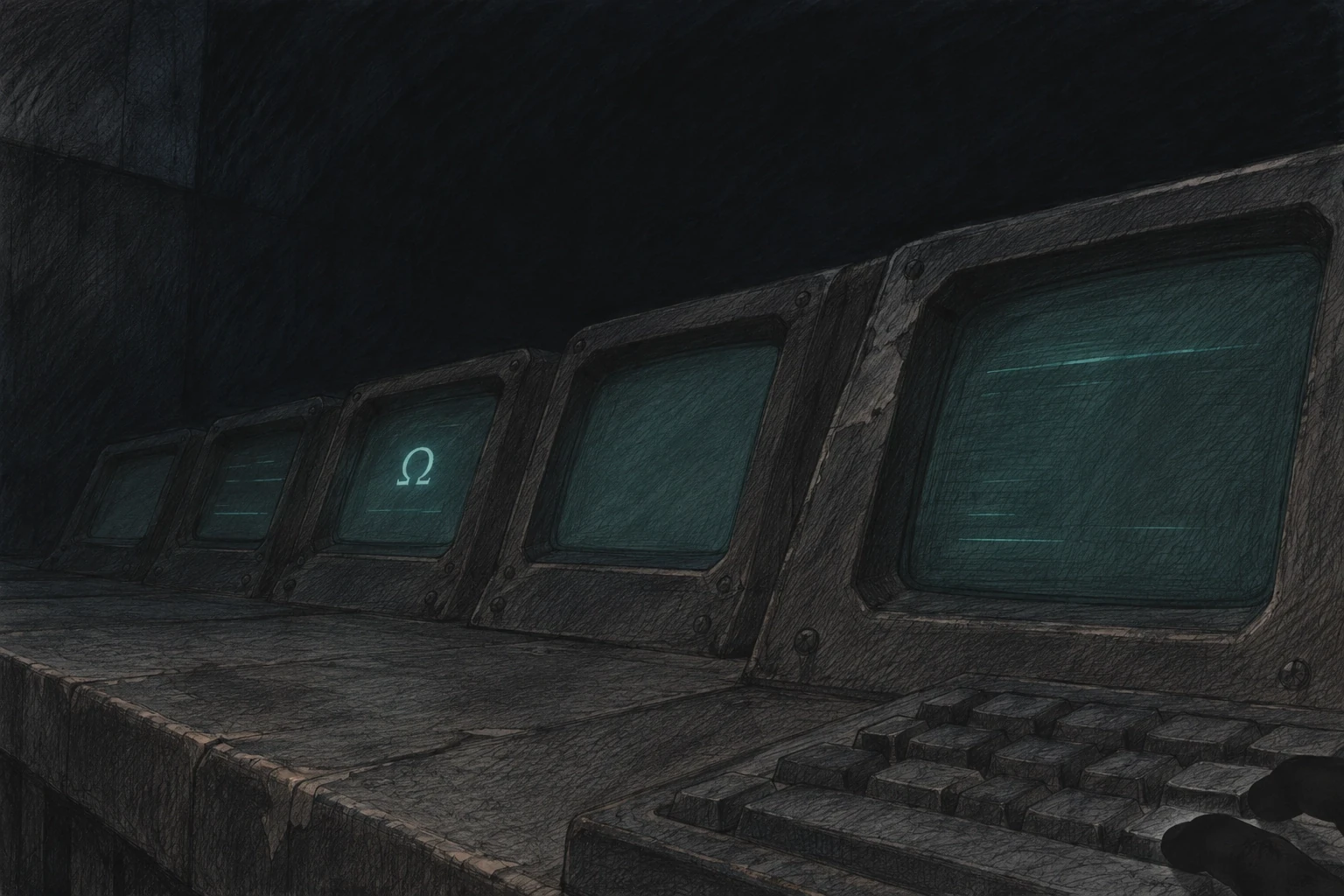
“Potentially.” Nils had stopped trying to hide how much it interested him. “What we’re seeing suggests a network of NEXUS-class sites. Some dormant, some… listening.” He pointed from the Ω on the monitor to the alloy door. “This is where the signal converges. All routes terminate here.”
Craig watched the violet light keep its slow beat. Someone had meant for all of this to talk to something. At least whoever it was had the decency to be elsewhere.
“So this is an operator,” he said.
“Exactly. A control layer. Professor Rho believes whatever’s behind that door speaks to the cities. Issues instructions. Wakes them up.”
Ash scattered from Craig’s cigarette across the concrete. “And if someone else finds it first?”
Nils’s jaw tightened. “Then whoever they work for stops competing over access to NEXUS‑09 and starts deciding which cities get to exist.”
The room felt a shade narrower. The machines went on with their quiet chatter.
Craig took one last drag, ground the cigarette out beneath his heel and let himself enjoy the shape of the problem. The board saw a liability, a stalled initiative left by a government that no longer existed. Leonard Velon understood the future was already bleeding through it. Craig was still trying to see the edges of the board he’d just been handed.
“Rho give it a name yet?”
Nils opened one last window. White letters on black.
“Internal marker only. Rho keeps flagging it against an old, half-erased project string in the government archives. ‘AION.’ No full designation yet.”
Craig tried the word in silence. Felt like a first move.
“Fine. Easy to remember. Easier to bury.”
He turned from the screen. “Keep it off the books, Ostergaard. No Velon channels, no shared logs. As far as the Security Corps is concerned, this cell is chasing background noise and misfiled government junk. Anyone asks, you’re overworked and underfunded. Play it convincingly.”
“Understood, sir.”
Craig looked at the door again. Whatever lay on the other side, there was still the city to reckon with.
“Let NEXUS‑09 keep chewing on itself,” he said softly. “When it’s done, we’ll decide what’s left standing.”
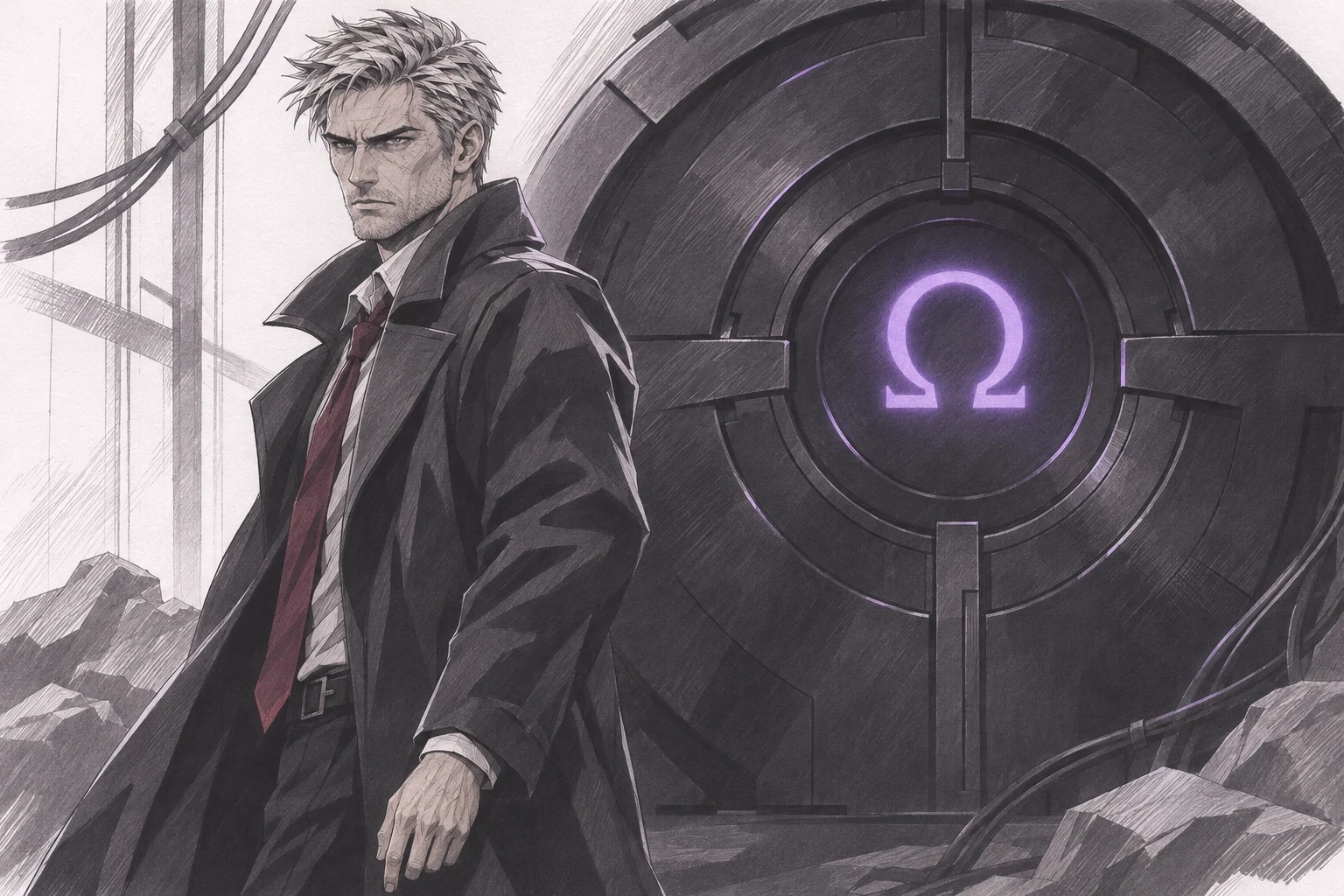
He turned away without waiting for an answer. The Ω went on pulsing, violet light washing over the cavern as he worked out his next three moves.